7 Best Kendama in 2026: A Complete Comparison Guide for Every Skill Level
[Published: August 22, 2026 | Last updated: August 22, 2026] | 12 min readA kendama is a traditional Japanese wooden skill toy with a handle (ken), three cups, a spike (kensaki), and a ball (tama) connected by a string. The goal is to toss the ball and catch it on the cups or land it on the spike. This guide breaks down the 7 best kendamas on the market right now, organized by skill level, with clear specs and prices so you can buy with confidence.
TL;DR
- The best kendama overall for beginners is the Kendama USA Kaizen Half Split (~$29.99) – sticky paint, excellent ball tracking, and pro-level design at an entry price.
- The best competition-certified kendama is the OZORA by Yamagata Koubou (~$29-$40) – officially certified by the Japan Kendama Association (JKA) and handmade in Japan since 1977.
- The best widely available budget pick is the Duncan Komodo (~$23.99) – durable beechwood, competition size, sold on Amazon and Walmart.
- Paint finish matters more than price: a tacky or matte “silk” paint grips the ball during balance tricks; a glossy finish causes the tama to slide off cups and frustrates new players. (HobbyStack, 2026)
- Maple is the best wood for the ken (handle) – harder, more durable, and better for spikes. Beech is the best wood for the tama (ball) – softer, breaks in faster, ideal for stalls. (Sol Kendamas, 2025)
What Is a Kendama and How Does It Work?
A kendama is a wooden ball-and-cup skill toy. The ken is the handle that holds three cups: the big cup (ozara), the small cup (kozara), and the bottom cup (chuzara). At the top of the ken is a spike (kensaki). The tama is the ball, which has a hole (ana) drilled through it and connects to the ken by a string.
Players perform tricks by tossing the tama into the air and catching it on one of the cups or the spike. Beginners start with simple cup catches. Advanced players work up to balance tricks like lunars (balancing the tama on the edge of the big cup) and lighthouses (balancing the entire ken on top of the tama). (Japan Kendama Association, 2025)
The toy originated in Japan during the Edo period (1600-1868), adapted from the French cup-and-ball toy bilboquet. Today, kendama is a competitive sport with annual world championships held in Japan.
What to Look for When Buying a Kendama
Before diving into the list, here are the criteria used to evaluate each option:
| Criterion | Why It Matters |
|---|---|
| Paint finish | Tacky or silk matte paint grips the tama during balance tricks; glossy paint causes slides and failed catches |
| Wood type for ken | Maple is harder and more durable; beech is more affordable and still solid |
| Wood type for tama | Beech breaks in faster for stalls; cherry is lighter and easier to juggle |
| Ball tracking | Two-tone or split designs help players see tama rotation during tricks |
| Spike and bevel quality | A well-cut bevel guides the spike into the tama hole reliably |
| Size (standard vs novelty) | A standard-size kendama (roughly 18 cm tall) lets every tutorial and trick translate directly |
| Price | Ranges from ~$20 for beginner models to $50+ for pro or limited-edition designs |
| JKA certification | Only matters if you plan to use the kendama in official competitions or license exams |
| Extras included | Replacement strings, bead, stickers, and trick guides add real value for new players |
| Brand community support | Brands active in the kendama community (events, pro teams, tutorials) provide better long-term support |
Here is a deeper look at each kendama, covering the real-world play experience, strengths, and who should skip it.
1. Kendama USA Kaizen Half Split – Best Overall
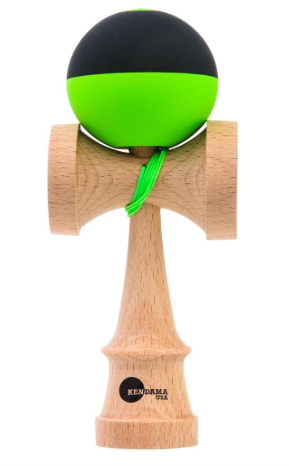
The Kaizen Half Split is the most widely recommended first kendama for good reason. It pairs a beechwood tama with super-sticky silk paint and multiple ball-tracking features, all on a Jet Shape or Nova Shape ken designed by Kendama USA’s pro team. Available in a wide range of colors on Amazon (~$29.99).
Key features:
- Beechwood tama with super-stick or silk matte paint for maximum grip during balance tricks.
- Half-split two-tone tama design with top dot tracking point for easy visual rotation tracking.
- Bevel stripe and painted base-cup hole improve spike accuracy out of the box.
- Includes extra string, bead, stringing tool, stickers, and a pocket trick guide.
Kendama USA has operated since 2006 and is the longest-running dedicated kendama brand outside Japan. The Kaizen Half Split is the result of over 16 years of product refinement, and it shows in the details. The two-tone tama with a top dot and painted bevel stripe addresses one of the biggest problems beginners face: losing sight of where the hole is during a trick. Every tracking improvement was tested by their pro team before production.
The silk or super-stick paint options give the tama just enough grab on the cups without feeling rubbery. Players can land balance tricks like lighthouse and lunar without the ball skidding off, but there is still enough slide to make adjustments during the trick. The extra-long color-matched string is a genuine upgrade over generic strings that come on cheaper models.
The Nova shape (the current Jet shape upgrade) increased cup size and bevel width compared to earlier Kaizen versions, which reduces rocking on catches and makes spiking more consistent. The bezel is angled and chiseled, which helps with balance tricks and stalls. For players who want one kendama that covers beginner to advanced play, this is the pick.
Pros:
- Best-in-class paint grip for a production kendama under $30.
- Multiple ball-tracking design elements help players progress faster.
- Includes extras: string, bead, stringing tool, stickers, trick guide.
- Available in a wide range of colors.
Cons:
- Beechwood tama may not break in as fast as cherry wood for some balance tricks.
- Glossy alternative paint options on some color runs are less grippy than silk.
Best for: Beginners buying their first kendama, players returning to kendama after a break, and intermediate players who want a reliable go-to.
Not Ideal For: Experienced players looking for a pro-model maple ken with a heavier, more precise feel.
Pricing: ~$29.99 on Amazon and KendamaUSA.com
2. OZORA by Yamagata Koubou – Best for Traditionalists and Competition Players
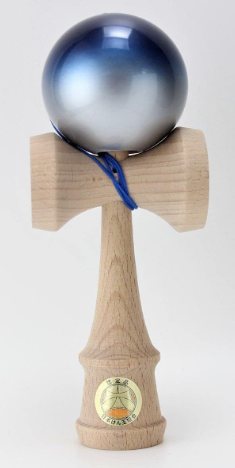
The OZORA is the standard kendama used in official Japan Kendama Association (JKA) competitions and license exams. Produced by Yamagata Koubou in Japan since 1977, it uses beech for the ken and cherry wood for the tama. Available on Amazon and specialty retailers for ~$29-$40.
Key features:
- JKA certified – the only type accepted in official competition and certification tests.
- Handmade by craftsmen in Yamagata prefecture, Japan.
- Comes with a certificate of authenticity, official JKA seal, spare string, and instruction pamphlet.
- Traditional shape favored by players who learned on classic Japanese kendama.
The OZORA is made by Yamagata Koubou, a Japanese manufacturer that has produced kendamas since 1977. Every OZORA is certified by the Japan Kendama Association, which means it meets the exact specifications used in official tournaments, license exams, and JKA-sanctioned events. The JKA seal stamped on the ken is the only recognized mark for tournament-legal play. (Japan Kendama Association, 2025)
The OZORA uses beech for the ken and cherry wood for the tama. Cherry wood is lighter than beech, which makes the tama easier to juggle and gives it a slightly different feel during catches. The balance is very precise, which experienced players notice when doing stall-based tricks. The glossy paint on standard OZORA models requires a break-in period of 5-10 hours of play before it grips consistently.
The traditional shape is narrower and more compact than modern American-designed kendamas like the Kaizen or Boost shapes. Some beginners find the older shape harder to learn on because the cups are slightly smaller. For players who want to follow the JKA grading system or enter official competitions, the OZORA is the required equipment.
Pros:
- JKA certified for official competition and license exam use.
- Handmade in Japan by craftsmen with 50 years of experience.
- Includes certificate of authenticity and official JKA seal.
- Cherry wood tama is lightweight and easy to juggle.
Cons:
- Glossy paint requires extended break-in time before gripping well.
- Traditional shape has smaller cups – harder for beginners than modern designs.
- Limited availability – must order from specialty retailers or Japanese import sellers.
Best for: Players who want to enter JKA competitions or pursue official grading exams, and experienced players who prefer the traditional Japanese shape.
Not Ideal For: Beginners who want a tacky paint finish and easy out-of-the-box playability.
Pricing: ~$29.99-$40.00 depending on color and retailer
3. KROM POP – Best for European Players and Gift Buyers
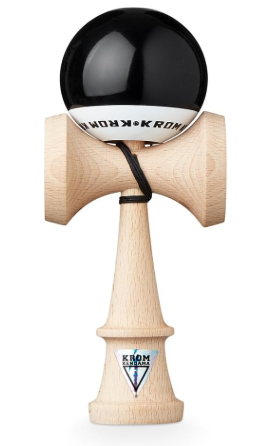
KROM is a Denmark-based brand that offers solid, beginner-friendly kendamas at a fair price. The KROM POP is made from beechwood with a smooth texture and consistent balance, and it ships globally. At ~$24.95, it is a common recommendation for players outside North America and a reliable gift option. Available on Amazon and Walmart.
Key features:
- Beechwood construction with a smooth, balanced feel.
- Available in 12+ colors, making it a strong gift option.
- Includes extra string and stickers in the box.
- Suitable for beginners through intermediate players.
KROM Kendama is a Danish brand that has been producing kendamas since around 2012 and is one of the most widely distributed kendama brands globally. The KROM POP is their main production model, made from beechwood with a balanced, symmetrical shape that feels natural in the hand. At roughly $24.95, it lands in a competitive price bracket without sacrificing build quality.
The KROM POP ships with extra strings and stickers, and comes in 12 or more color options that make it an easy gift pick when you are not sure of the recipient’s preference. The beechwood construction is solid, and the surface finish is smooth without being as grippy as a silk or sticky paint finish. New players find the KROM approachable, though they will progress faster on a tacky-paint option.
Pros:
- 12+ color options – the widest color range of any single kendama model.
- Globally distributed and easy to find in Europe, Australia, and North America.
- Solid beechwood build that holds up to daily use.
- Consistently fair price with extras included.
Cons:
- Paint finish is smoother than silk or sticky options, which slows early progress on balance tricks.
- Shape is slightly more traditional, so beginners may find catches harder than on wider modern designs.
Best for: Gift buyers, international players, and anyone who wants a solid everyday player in a variety of colors.
Not Ideal For: Players who have tried a tacky-paint kendama and want the same level of grip.
Pricing: ~$24.95 on Amazon and Walmart
4. Yomega Pro Model Kendama – Best Budget Sticky-Paint Pick on Amazon
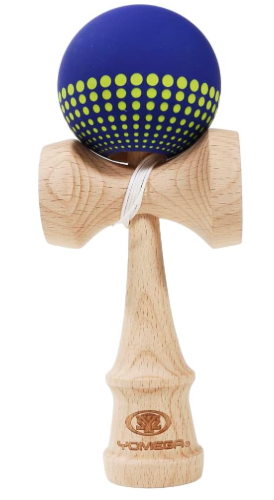
The Yomega Pro Model is a standard-size, standard-shape kendama with a rubberized paint finish that grips far better than a cheap glossy option at a similar price. At roughly $24, it is the most accessible tacky-paint kendama for players who want to avoid the frustration of a slippery ball. (HobbyStack, 2026)
Key features:
- Rubberized (tacky) paint on the tama for reliable cup and spike catches.
- Standard shape and size – every tutorial and trick translates directly.
- Trusted skill-toy brand with decades of production experience.
- Available in multiple colors on Amazon with Prime shipping.
Yomega is best known for its yoyos but has been making kendamas as part of its skill-toy lineup for years. The Pro Model hits the price range that many gift buyers target (~$23-$25) while delivering what matters most for beginners: a rubberized or tacky paint finish that actually grips the ball during catches and balance tricks.
The standard shape and size means every video tutorial on YouTube translates directly to the Yomega Pro Model without timing adjustments. There are no unusual proportions or novelty design features that would throw off your practice. The rubberized coating is slightly tackier than silk matte options, which is ideal for complete beginners who want more forgiveness on cup catches.
Pros:
- Rubberized paint is one of the grippiest finishes available at this price point.
- Standard shape – every kendama tutorial and progression applies directly.
- Available on Amazon with Prime shipping in multiple colors.
- Trusted brand with decades of skill-toy manufacturing behind it.
Cons:
- Less community involvement than brands like Kendama USA or Sweets.
- Limited color options compared to KROM or Kaizen lines.
Best for: First-time buyers on a budget who want a tacky-paint kendama without specialty-shop shipping costs.
Not Ideal For: Intermediate or advanced players who need a shaped bevel or split tama for trick tracking.
Pricing: ~$23-$25 on Amazon
5. Duncan Komodo Kendama – Best Widely Available Competition-Size Pick
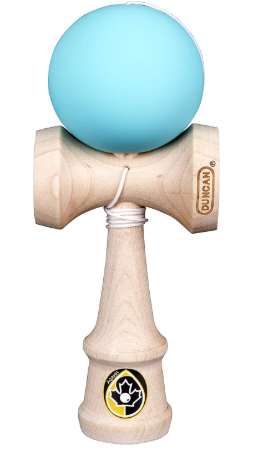
The Duncan Komodo is certified at competition size and weight (4 oz) and made from high-quality beechwood with a chip-resistant glossy paint finish. It is sold at Walmart, Amazon, and major toy retailers, making it the most accessible certified-size kendama in the US. Available for ~$23.99. (Duncan Toys, 2025)
Key features:
- Competition size and weight (4 oz) certified for tournament play.
- Durable beechwood construction with chip-resistant glossy paint on the tama.
- Available in multiple colors; sold at Walmart and Amazon nationwide.
- Best for players who want a proper-size kendama without ordering from a specialty shop.
Duncan Toys has been in the skill-toy business for over 90 years and brings that manufacturing experience to the Komodo kendama. The Komodo is certified at competition size (4 oz) and is built from durable beechwood with a chip-resistant glossy paint. At ~$23.99, it is sold at Walmart, Amazon, and major toy chains, making it the easiest kendama to find in a physical store.
The Komodo’s glossy paint is the main trade-off. Glossy finishes cause the tama to slide off cups more easily than tacky or silk matte finishes, which means beginners will find balance tricks harder to land. The competition-certified size and weight are correct for anyone who eventually wants to enter tournaments without buying a different model. The Komodo is a fair option for a gift or a casual first player.
Pros:
- Available in Walmart and major retailers – no specialty shipping required.
- Competition-certified size and weight (4 oz).
- Durable chip-resistant paint holds up to drops and daily play.
- Reliable Duncan brand quality control.
Cons:
- Glossy paint finish slides more than tacky or silk matte alternatives.
- No extras included – no replacement string, stickers, or trick guide.
Best for: Players who need to buy in a physical store and want a competition-size kendama at a fair price.
Not Ideal For: Beginners who will be frustrated by a slippery ball finish. Pair it with a replacement tacky-paint tama if you buy this one.
Pricing: ~$23.99 on Amazon and Walmart
6. Sweets Kendamas Radar Boost – Best for Intermediate Players Ready to Progress
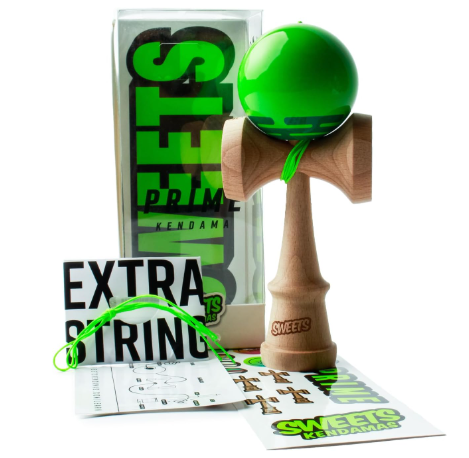
Sweets Kendamas is a Minneapolis-based brand known for sticky “Cushion Clear” or “Anti-Skid” paint that gives the tama a near-rubber grip. The Radar Boost is their entry point into modern-shape kendamas and is designed to help players land balance tricks like lunars and lighthouses faster. Available on Amazon and SweetsKendamas.com for ~$40-$50.
Key features:
- Sticky Cushion Clear paint provides one of the best grip finishes available on a production kendama.
- Boost shape increases cup size for easier catches at the intermediate level.
- Includes extra string and is packaged with skill-building accessories.
- Produced by a pro-team-run brand with active community involvement.
Sweets Kendamas is a Minneapolis-based, player-owned brand founded by pro player Matt “Sweets” Jorgenson. Their Cushion Clear paint – described as feeling almost rubber-like to the touch – is widely considered the grippiest paint finish in production kendama. The Radar Boost shape is their entry-level modern shape, scaled to help players who have mastered basic spikes and cup catches start landing stalls and balance tricks consistently.
The Boost shape increases cup size over traditional designs, which reduces rocking on catches and makes cup landings more forgiving at the intermediate level. The tama is heavier than a cherry wood option, which gives it more predictable arc during swings and lunars. Sweets also publishes video tutorials through their YouTube channel, which pairs well with their products.
Pros:
- Cushion Clear or Anti-Skid paint is among the grippiest finishes in any production kendama.
- Boost shape cup size is specifically designed for intermediate balance-trick progression.
- Player-owned brand with active community support, events, and tutorials.
- Available on Amazon with Prime shipping.
Cons:
- Higher price ($40-$50) compared to beginner options.
- The rubber-like paint may feel too sticky for players who prefer a slightly looser stall.
Best for: Intermediate players who have done 50+ hours on a beginner kendama and want a dedicated progression tool.
Not Ideal For: First-time buyers – the price and specialized feel are overkill for someone who has not landed a basic spike yet.
Pricing: ~$40-$50 on Amazon and SweetsKendamas.com
7. Kendama USA Kaizen Triple Stripe – Best for Trick Visibility and Style
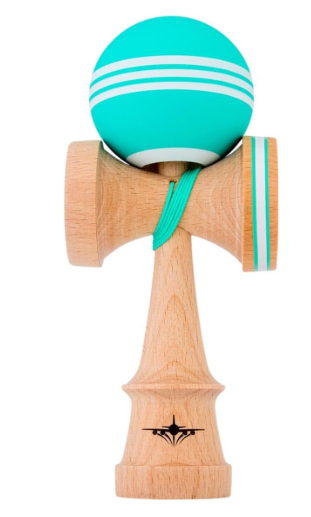
The Kaizen Triple Stripe adds a third stripe to the standard half-split tama, giving players three tracking bands to monitor ball rotation during advanced tricks. It uses the same Jet Shape ken and silk paint as the Half Split, but the triple stripe design is specifically built for players working on harder rotation-based tricks. Priced around $44.99.
Key features:
- Three-stripe tama design for maximum rotation tracking during tricks.
- Jet Shape ken with the same engineering standards as the Kaizen Half Split.
- Silk paint with chip-resistant coating.
- Best for intermediate players who have outgrown the half-split design.
The Kaizen Triple Stripe is the Kaizen Half Split with a third color band added to the tama. Three stripes give the player three visual reference points to track how many times the tama has rotated during tricks like around-the-world, whirlwind, and triple-spike combinations. Rotation tracking is one of the harder skills to develop, and having three bands instead of two makes it significantly easier to see the tama’s spin in real time.
The Jet Shape ken and silk or sticky paint options are identical to the Half Split, so players familiar with the Kaizen line will not need any adjustment. The price bump from the Half Split (~$29.99) to the Triple Stripe (~$44.99) is the main trade-off. For players who are not yet working on rotation tricks, the extra stripes add no functional benefit.
Pros:
- Three-stripe tracking is the best visual aid for rotation-based tricks.
- Same Jet Shape ken and silk paint as the Half Split – no learning curve.
- Built-in bevel stripe and base-cup tracking from the Kaizen line.
- Great for filming and posting tricks – easy to see rotation in video.
Cons:
- $15 more than the Half Split for cosmetic tracking improvements that only matter at intermediate+ level.
- Available in fewer color combinations than the Half Split line.
Best for: Intermediate players who are learning around-the-world tricks, juggle spikes, or rotation combos.
Not Ideal For: Beginners who would get the same benefit from the cheaper Half Split.
Pricing: ~$44.99 on Walmart and KendamaUSA.com
Comparison Table: Best Kendamas at a Glance
| Name | Best For | Price | Wood (Ken/Tama) | Paint Finish | JKA Certified |
|---|---|---|---|---|---|
| Kendama USA Kaizen Half Split | Best overall / Beginners | ~$29.99 | Beech/Beech | Silk or Super-Stick | No |
| OZORA by Yamagata Koubou | Competition and traditionalists | ~$29-$40 | Beech/Cherry | Glossy (break-in needed) | Yes |
| KROM POP | Gift buyers / International players | ~$24.95 | Beech/Beech | Smooth matte | No |
| Yomega Pro Model | Budget sticky-paint beginners | ~$23-$25 | Beechwood | Rubberized/Tacky | No |
| Duncan Komodo | Wide retail availability | ~$23.99 | Beech/Beech | Glossy chip-resistant | No |
| Sweets Kendamas Radar Boost | Intermediate progression | ~$40-$50 | Varies/Beech | Cushion Clear / Anti-Skid | No |
| Kendama USA Kaizen Triple Stripe | Rotation trick tracking | ~$44.99 | Beech/Beech | Silk | No |
How to Choose the Right Kendama for Your Skill Level
Beginners (0-50 hours of play)
Start with a tacky or silk matte paint finish on a standard-size kendama. Do not buy a glossy-finish kendama as your first – the ball will slide off the cups repeatedly and most players quit thinking the toy is too hard. Pick up the Kendama USA Kaizen Half Split or the Yomega Pro Model.
A slightly tacky, matte finish makes balancing and catching much easier; a cheap glossy finish is slippery and frustrating. Standard beechwood on both ken and tama is the right starting material. You do not need maple or cherry wood until you know you want to continue past the basics.
Intermediate Players (50-300+ hours of play)
At this level, paint grip and tama tracking start to matter a lot more. Move to a two-tone or three-stripe design and look at brands with modern shapes – wider cups, deeper bevels, angled rims. The Sweets Kendamas Radar Boost and the Kaizen Triple Stripe are both built for this range.
The number one wood combination for kendama is a maple ken paired with a beech tama. If you are buying your second kendama, prioritize a maple ken for better feel on spike tricks.
Advanced and Competition Players
Go for maple wood and a pro model from a brand that is active in the community like Sol Kendamas, Kendama Co, or Kendama USA. If you plan to enter JKA-sanctioned events, you must use a JKA-certified kendama – which means an OZORA or one of the other approved Japanese models.
Common Mistakes When Buying a Kendama
- Buying a glossy-paint kendama as a first kendama. The ball slides off cups, tricks feel impossible, and most players give up. The paint finish is the single biggest factor in beginner experience.
- Choosing a novelty or non-standard size. Mini kendamas, giant sumo kendamas, and oddly-shaped novelty models throw off the timing and balance you build from tutorials. Start on a standard 18cm model.
- Skipping the break-in period on a new kendama. A new tama – even a sticky one – benefits from 2-5 hours of play before the paint settles into its best grip. Do not judge a kendama in the first 30 minutes.
- Buying a limited-edition model as your first kendama. Players who buy an expensive or rare first kendama often baby it and do not practice enough. A ~$25-$30 beater with good paint is the smarter call.
- Buying on visual design alone. The color and graphic of a kendama do not affect playability. Choose wood type and paint finish first, then pick the color you like from the options.
Frequently Asked Questions About Kendama
What is the best kendama for beginners?
The Kendama USA Kaizen Half Split (~$29.99) is the best kendama for beginners. It has a tacky silk paint finish, a split tama for easy trick tracking, and a modern Jet or Nova Shape ken that makes spikes and cup catches more forgiving than traditional designs. Every purchase includes a trick guide, extra string, and bead.
What is the difference between a JKA-certified kendama and a regular kendama?
A Japan Kendama Association (JKA)-certified kendama meets exact specifications for cup size, tama diameter, weight, and material set by the JKA. Only JKA-certified kendamas are allowed in official competitions and skill certification exams in Japan. The OZORA by Yamagata Koubou is the most widely available JKA-certified model. For casual play and learning, a non-certified kendama like the Kaizen Half Split performs better due to its modern shape and stickier paint. (Japan Kendama Association, 2025)
What does “silk paint” or “sticky paint” mean on a kendama?
Silk paint is a matte, slightly tacky coating applied to the tama. It grips the cups and spike during balance tricks better than a standard glossy finish. Super-stick or rubberized paint is even tackier and gives even more grip. Glossy paint is smooth and slippery, which makes balance tricks harder. Nearly every skilled kendama player recommends starting with a silk or sticky paint finish.
How long does it take to learn kendama tricks?
Most players can land a basic cup catch within a few hours. Spiking the ball takes most beginners 5-15 hours of practice. Intermediate tricks like lunars (ball balanced on the edge of the big cup) typically require 50-100 hours of regular play. Pro-level tricks like triple kenflips or juggle spikes take years. Improvement is mostly about consistent daily practice, not talent. (KROM Kendama, 2025)
What wood is best for a kendama?
Maple is the best wood for the ken (handle) due to durability and strength. Beech is the best wood for the tama because it is slightly softer and breaks in faster for balance tricks and stalls. For budget players, a beech-only kendama (both ken and tama) is a perfectly solid option. Cherry wood tamas are lighter and easier to juggle. Beech wood is the best entry-level wood type for kendama – inexpensive, durable, and a fair weight.
Are there free or cheap kendama options?
Budget kendamas under $20 exist but most use glossy paint finishes that make learning significantly harder. The Duncan Komodo at ~$23.99 and the Yomega Pro Model at ~$23-$25 are the lowest price points with acceptable build quality. Avoid generic unbranded kendamas from mass-market sellers – they typically use glossy paint and poor wood, which leads to a frustrating experience.
Can adults play kendama, or is it just for kids?
Kendama is genuinely popular across all ages. The competitive scene is predominantly adult, and the Japan Kendama World Cup draws adult competitors from dozens of countries. More than 3 million people worldwide are said to have taken up kendama, and the growth in the sport is largely driven by adult street-culture and skate-culture crossover audiences. A standard-size kendama works the same way for a 10-year-old and a 40-year-old.
Final Verdict
The Kendama USA Kaizen Half Split is the best kendama for most players in 2026. At ~$29.99, it combines a pro-designed ken shape, a split tama with multiple tracking points, and a sticky silk paint finish that lets beginners land balance tricks without a frustrating break-in period. It covers beginner through advanced play and is widely available on Amazon.
If you plan to enter official JKA competitions or follow the Japanese grading system, the OZORA by Yamagata Koubou (~$29-$40) is the required choice – handmade in Japan and the only widely available JKA-certified model. For players who want to buy in a physical store today, the Duncan Komodo at ~$23.99 at Walmart is the most accessible certified-size option.